
Precise pH management is a foundational chemical control variable in hydroponic cultivation. By consistently optimizing pH across all crop growth stages, growers ensure maximum mineral availability and uptake, directly preventing hidden deficiencies and maximizing overall plant health. This data-driven approach translates into predictable, high-quality yields and a significant return on investment.
Why Precise pH Matters for Nutrient Uptake
To truly grasp the power of pH in cultivation, we must look beyond its numerical value. pH, simply put, is a measure of the hydrogen ion concentration in a solution. In the complex chemical ballet of a nutrient solution, pH acts as a master conductor, dictating which minerals are available for your plants to absorb and which remain stubbornly out of reach. Think of your nutrient solution as a bustling nutrient highway. When the pH is optimal, all lanes are open, and essential minerals travel freely, ready to be picked up by the roots. When pH drifts too high or too low, it's as if vital lanes close down, leading to nutrient lockout - a scenario where nutrients are present in the solution but chemically unavailable to the plant, much like being stuck in traffic despite an open road ahead.
Physiological principles clearly show that the pH curve directly impacts the solubility and bioavailability of essential minerals. For instance, at a pH above 6.5, vital micronutrients like iron, manganese, and zinc tend to become less soluble, precipitating out of the solution and making them inaccessible. Conversely, if the pH drops too low, say below 5.0, certain macronutrients, like calcium and magnesium, can become less available, while others, like manganese, might become overly abundant, leading to toxicity. This delicate balance, often centered around a sweet spot of 5.8-6.0 within a broader optimal range of 5.5-6.0, is essential for healthy plant metabolism. Furthermore, plant roots are not passive observers; they actively influence their surrounding environment. Through the release of organic acids and other compounds (root exudates), plants create a dynamic pH curve in the rhizosphere (the root zone), further emphasizing the need for constant monitoring and adjustment to maintain optimal conditions for mineral absorption.
The High Cost of pH Drift: Case Studies in Hidden Nutrient Lockout
Despite its critical importance, inconsistent pH management remains a common operational bottleneck in many commercial facilities. The consequences often manifest as invisible problems that can significantly reduce crop value.
-
Case Study: The Blind Spot Grower
A commercial grow operation, aiming for robust blooms, meticulously followed their feeding schedule, targeting an EC of 2.4 during the "Swell" phase, as outlined in the DTR High Strength Feed Chart. However, despite ample nutrient delivery, the lead grower observed reduced size and a dull, washed-out coloration in their specialty produce. The feed solution's EC was perfect, validating the nutrient concentration. Yet, due to infrequent pH checks, the actual root zone pH consistently drifted above 6.5. This sustained high pH led to iron and manganese deficiencies - elements abundantly supplied in Part A (contributing 1.1 EC during Swell) - simply because they were chemically unavailable. The hidden cost wasn't cheap fertilizer, but lost yield and diminished floral quality, directly impacting market value.
-
Case Study: The Aggressive Corrector
Another specialty cultivar facility, highly aware of pH's importance, attempted to maintain an exact pH of 5.8 throughout their cycles. However, their method involved aggressive, large doses of pH adjusters to quickly correct even minor fluctuations. Physiological principles show that these rapid, drastic pH swings (e.g., a sudden drop from 6.2 to 5.5 or vice versa) shocked the root system. This stress disrupted nutrient uptake mechanisms, leading to inconsistent growth, varied plant vigor, and susceptibility to disease, despite constant, well-intentioned adjustments. The pursuit of an exact number without understanding the impact of sudden shifts proved counterproductive.
-
The Unbuffered Burden
A new facility, prioritizing clean inputs, relied solely on Reverse Osmosis (RO) water without fully appreciating its lack of buffering capacity. While feeding at an EC of 3.0 during the “Veg/Moms” phase (as per the DTR High Strength Feed Chart), the pH of their nutrient solution plummeted rapidly after mixing due to the inherent acidity of some nutrient components. This led to initial micronutrient toxicity (for example, manganese becoming overly available at low pH) and disrupted uptake of other crucial elements like calcium and magnesium as the root-zone pH drifted outside the optimal range. The consequence was compromised early growth, setting back the entire crop cycle from the start.


Hydroponic pH Strategy for High-Value Crops
The Front Row Ag nutrient system is specifically designed to facilitate an effective hydroponic pH strategy, minimizing the challenges presented by pH drift and ensuring optimal mineral availability. The system's inherent stability begins with a precise mixing order, critical for preventing precipitation and ensuring solubility.
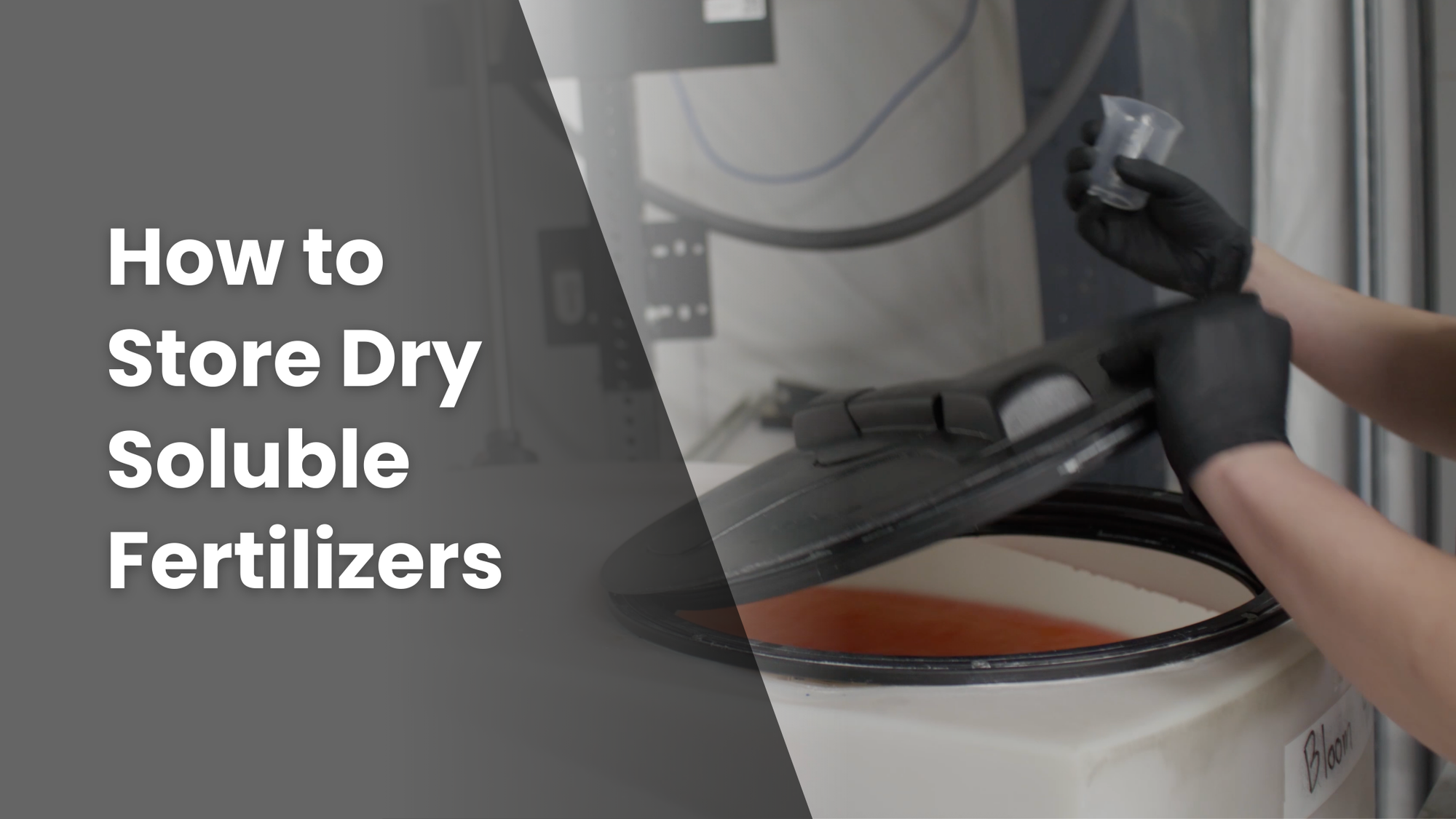
The recommended mixing order starts with filling the reservoir to target volume and beginning agitation. Following Front Row Ag’s Direct to Resevoir instructions, nutrients are added in sequence: Part A, then Part B (with PhosZyme if used), and finally Bloom, and finally pH up. In systems using Front Row Si, Autopot-style DTR guidance places Si immediately after filling the reservoir and starting agitation, before the base parts, to minimize precipitation risk. This sequence is not arbitrary. Part A, containing a robust micronutrient package and contributing a significant portion of the initial EC (e.g., 2.0 EC in the DTR High Strength Veg recipe) is added first to ensure these vital, pH-sensitive elements dissolve completely in a less concentrated solution. As Part B (contributing 1.0 EC in the same Veg recipe) and Bloom are introduced, the EC increases gradually, and the components are already well-dissolved, minimizing the risk of precipitation. This sequential addition, with 3-5 minutes of agitation between each part, is fundamental to maintaining solution stability.
Front Row’s Direct to Reservoir guidance typically targets a pH of 5.8-6.0 for most recipes, while the Simplified Cloning SOP specifies pH 5.8 for the cloning feed. For facilities utilizing low-alkalinity RO water, Front Row pH Up plays a crucial role. This powdered, dry soluble water conditioner utilizes potassium carbonate to buffer fertilizer acidity, preventing drastic pH drops. The principle of adding pH adjusters "pH up last, pH down first" is paramount. This ensures that the primary nutrient components are fully dissolved before fine-tuning the pH. The system's inherent balance is visible in our DTR High Strength Veg recipe, where Part A contributes 2.0 EC and Part B contributes 1.0 EC. This formulation, when properly mixed, helps maintain pH stability, supporting the plant's metabolic demands without creating undue stress. Additionally, Front Row Si contributes 13ppm of Monosilicic Acid at a rate of 0.25 ml/gal, without contributing any additional potassium ions or changing solution pH, simplifying pH management by not adding extraneous ions or affecting pH.
Actionable Strategies for Hydroponic pH Stability
Achieving consistent pH optimization in hydroponics requires a proactive and data-driven approach. Here are actionable strategies for lead growers to master this critical variable:
Dynamic pH Curve Monitoring for Optimal Nutrient Uptake
Move beyond static measurements. Implement daily monitoring of both feed and runoff pH, and crucially, track the pH curve throughout the irrigation cycle, not just at the moment of mixing. Utilize data loggers in your root zone sensors to observe subtle hourly shifts. This dynamic perspective provides invaluable insight into how your plants are interacting with the nutrient solution and influencing their rhizosphere pH, allowing for truly informed adjustments.
Tailor Your Flowering pH Adjustments for Generative Cues
As a general consideration, the 5.8-6.0 range is a good range, physiological principles indicate that subtle shifts within this range can influence mineral partitioning, aiding generative development. For specialty produce, consider maintaining a slightly lower pH (e.g., 5.6-5.8) early in the generative phase, then allowing a slight, controlled rise toward 6.0 later in the cycle. These nuanced flowering pH adjustments can signal to the plant to prioritize reproductive structures, potentially enhancing yield and quality.
Proactive Alkalinity Management: Know Your Source Water
Conduct regular comprehensive water quality analyses to understand your source water's inherent alkalinity and initial pH. This crucial data informs whether you'll primarily need an acid (like pH Down for city water with higher alkalinity) or a base (like Front Row pH Up for RO water with low alkalinity) to bring your solution into the target range. Adjusting stock solutions or Direct to Reservoir mixtures with this knowledge is a fundamental step in building a stable hydroponic pH strategy.
Master the Mixing Order: Prevent Precipitation and Lockout
Strictly adhere to the recommended Front Row Ag mixing order (Part A, Part B, Bloom, then pH adjusters). Allow 3-5 minutes of vigorous agitation between each component addition to ensure full dissolution. This seemingly small detail prevents localized pH imbalances and subsequent mineral precipitation, which can lead to hidden nutrient lockout even when the overall EC seems correct.
Calibrated Sensors: Your Indispensable Eyes on the Rhizosphere
Emphasize the absolute necessity of regularly calibrating all pH and EC meters. Uncalibrated sensors provide erroneous data, leading to incorrect adjustments and costly crop issues. Treat your sensors as your most critical diagnostic tools; their accuracy is paramount to effective hydroponic pH optimization.
Expert FAQ: Demystifying pH Metrics for Lead Growers
Why is the target pH range of 5.8-6.0 so critical for high-value specialty cultivars in our Front Row Ag feed charts?
This specific range is scientifically derived to maximize the solubility and absorption efficiency of the broadest spectrum of essential macro and micronutrients. Outside this narrow window, specific nutrients become chemically unavailable (locked out) to the plant, leading to deficiencies despite their presence in the solution. It is the sweet spot for nutrient bioavailability, ensuring that your specialty produce receives precisely what it needs for optimal development.
How does monitoring the "Part A EC" value on the feed chart, such as the 0.9 EC for Part A in Week 4-6 of the AUTOPOT Feed Chart, help me validate my pH management?
While Part A EC (e.g., 0.9 EC) itself is a measure of nutrient concentration, not pH, the consistent EC contributions for each part on the feed chart serve as a critical mixing validation tool. If your individual part EC readings are consistently off despite accurate weighing or dosing, it could signal issues like incomplete dissolution (which is often caused by pH-related precipitation) or sensor calibration problems. Maintaining these expected EC contributions confirms your base solution is correctly formed, allowing pH to be the isolated variable for fine-tuning.
We sometimes observe our reservoir pH slowly rising overnight. What could be causing this, and what strategies can we implement for more stable hydroponic pH?
Several factors contribute to this phenomenon. Plants' preferential uptake of anions (negatively charged nutrients) over cations (positively charged nutrients) can lead to the release of hydroxide ions (OH-), which increases pH. This is attributed specifically to preferential nitrate absorption Additionally, CO2 degassing from the nutrient solution or microbial activity within the reservoir can also influence pH upwards. For a more stable hydroponic pH, strategies include increasing the buffer capacity of your solution, particularly with Front Row pH Up if you are using low-alkalinity RO water. Implementing automated pH dosing systems for continuous, micro-adjustments can also prevent significant drift. Finally, adjusting irrigation schedules to reduce stagnant water periods in the reservoir and ensuring adequate aeration can help mitigate CO2 degassing.
Predictable Growth through pH Optimization
In commercial cultivation, every metric ties back to profitability. The meticulous pursuit of hydroponic pH optimization is not merely a scientific exercise; it is a fundamental driver of operational predictability, consistency, and ultimately, a healthy return on investment. By moving beyond guesswork and embracing a data-driven approach to pH management, lead growers unlock a new level of control over their specialty cultivars. Integrating meticulous pH control with a robust nutrient system like Front Row Ag empowers cultivators to achieve healthier plants, maximize yields, and consistently produce superior specialty produce. This scientific certainty provides the foundation for scalable success, turning once-invisible problems into manageable variables and transforming cultivation into a predictable, high-performance operation. Empower your grow today.