During cultivation, yield and quality most commonly drop due to mistakes in environmental control, nutrition and fertigation, root-zone management, lighting practices, and sanitation/IPM execution. Errors such as unstable VPD, improper EC, low dissolved oxygen, inconsistent irrigation timing, and poor airflow slow photosynthesis, reduce flower size, and increase susceptibility to pests and pathogens. Growers can prevent these issues with stable climate recipes, precise fertigation, correct substrate moisture content, clean irrigation plumbing, and consistent monitoring. Referencing standardized nutrient programs, such as the Front Row Ag feed chart, helps avoid hydroponic growth errors and supports more predictable outcomes.
Common Cultivation Mistakes That Reduce Yield and Quality
Controlled environment cultivation mistakes typically arise from preventable issues in climate, fertigation, lighting, and sanitation. When any of these systems drift out of spec, even slightly, plants down-regulate photosynthesis, reduce carbon allocation to flowers, and become more prone to disease. This article breaks down the most common hydroponic grow errors and gives practical, technician-level steps you can use today to maximize flower production.
Incorrect VPD and Environmental Instability
Environmental drift remains one of the most common cultivation mistakes. When temperature and relative humidity move outside target vapor pressure deficit (VPD) ranges, plant physiology becomes less efficient—but the response depends on the direction of the drift. At excessively high VPD, stomata partially close to limit water loss, reducing gas exchange and slowing nutrient transport. At very low VPD, stomata may remain open, but weak transpiration reduces calcium and other immobile nutrient movement into developing tissues. In both cases, nutrient mobility and growth consistency suffer.
Plants exposed to unstable VPD often show erratic transpiration, marginal leaf curl, and reduced calcium delivery to developing flowers. These issues frequently originate from poorly placed sensors, HVACD systems that overshoot setpoints, or dehumidifiers that cause relative humidity spikes during irrigation cycles. Maintaining stable VPD—typically around 0.8–1.1 kPa in vegetative growth and 1.0–1.4 kPa in flower—supports predictable transpiration, balanced nutrient flow, and helps prevent hidden yield loss.
Inconsistent Irrigation Frequency and Dry-Back
Uneven irrigation timing is a silent driver of low-yield outcomes. Both coco and rockwool require predictable dry-back cycles to maintain oxygen availability at the root zone. When irrigation starts too early in the photoperiod or dry-back fails to hit daily targets, the root zone shifts toward anaerobic conditions, leading to stunted growth and erratic EC distribution. Many operators also underestimate how emitter spacing and flow uniformity influence substrate moisture content. When dry-back is managed intentionally, plants respond with stronger roots, more efficient nutrient uptake, and more generative flower development.
Overfeeding or Underfeeding Due to Improper EC
Nutrient strength, measured as electrical conductivity, must match plant stage, environment, and irrigation strategy. Overfeeding increases osmotic pressure and restricts water movement into the plant, while underfeeding slows leaf expansion and terpene formation. Many hydroponic growth errors stem from improper mixing practices, such as converting daily tank recipes into stock concentrations incorrectly or adjusting EC without checking runoff values. Using a balanced system such as Front Row Ag A/B/Bloom provides predictable nutrient ratios and reduces EC drift across irrigation cycles. Stable EC prevents tip burn, lockout symptoms, and inconsistent bud size across the canopy.

Poor Water Quality and Low Dissolved Oxygen
Water chemistry often determines whether a crop thrives or struggles long before nutrients enter the picture. Warm fertigation water lowers dissolved oxygen (DO) levels and encourages pathogens like pythium, especially when temperatures rise above 22 °C (72 °F). High bicarbonate alkalinity disrupts pH stability, forcing growers into constant correction. Chloramines and other disinfectants in municipal water can stress roots unless properly filtered. Products like BioFlo help clear biofilm and buildup in irrigation lines and reservoirs, restoring more uniform flow and distribution to each plant site, while PhosZyme assists nutrient availability and helps roots perform more efficiently in challenging conditions. When water temperature, DO, and alkalinity remain consistent, plants grow more predictably and handle higher EC without stress.
Purchase BioFlo Enzymatic Cleaner From Front Row Ag


Silica Timing Errors
Silica plays a significant role in strengthening epidermal tissues and improving plant resilience, but it must be incorporated at the right time and in the correct mixing order. Many growers add silica after calcium sources, causing precipitation and clouding in the reservoir. Others apply silica too late into flower, when uptake is naturally reduced. Front Row Ag Si consistently performs best when it’s added to the reservoir before calcium-heavy components and used consistently at appropriate rates in the feed solution or foliar program from veg through the first 2–3 weeks of flower. When silica is implemented properly, stems remain sturdier, leaves resist abiotic stress more effectively, and plants maintain stronger structure during generative stacking.
Incorrect Lighting Intensity and Photoperiod
Light intensity drives photosynthesis, but incorrect PPFD or inconsistent dimming curves often limit plant performance. Excessive PPFD forces plants to allocate energy toward stress response rather than biomass production, while insufficient PPFD leaves carbon-limited flowers that never reach full density. Photoperiod transitions, especially between late veg and early flower, are another common trouble point because plants respond poorly to abrupt changes. A well-mapped canopy with even distribution reduces micro-stress and creates more uniform bud development. Matching light intensity with CO₂ levels, VPD, and irrigation frequency ensures plants can utilize the photons supplied.
Weak Airflow and Stagnant Boundary Layers
Airflow issues often go unnoticed until symptoms appear deep within the canopy. When air does not move evenly across plant surfaces, boundary layers thicken, slowing transpiration and reducing CO₂ exchange. Insufficient circulation produces localized humidity pockets that encourage powdery mildew and botrytis. Overpowered fans, on the other hand, create windburn and mechanical stress that halt growth. Balanced horizontal and vertical airflow allows plants to maintain stable leaf temperatures and supports uniform nutrient mobility. Healthy airflow is a direct contributor to consistent flower quality across all tiers and table positions.
Poor IPM Consistency and Sanitation
Inconsistent sanitation remains one of the most damaging grow mistakes because it allows pests and pathogens to gain a foothold before they are visible. Facilities that rely on reactive spraying instead of preventative protocols often face recurring issues with mites, thrips, powdery mildew, and botrytis. Poorly screened intakes, shared tools between rooms, and overcrowded canopies further accelerate pressure. Effective IPM depends on predictable schedules, documented scouting, clean work practices, and environmental recipes that do not favor disease. When sanitation is consistent, pressure stays low, and biological controls work far more effectively.
Not Managing Root Zone Pathogens
Root pathogens are opportunistic and spread quickly under warm, wet, oxygen-poor conditions. Early signs include slowed growth, drooping despite adequate moisture, discolored roots, and a sour smell in runoff. Many growers mistakenly treat these symptoms as nutrient deficiencies, adding more fertilizer and worsening the problem. Clean water practices, regular system maintenance, and enzymatic approach such as PhosZyme promote vigorous roots and a healthier rhizosphere, making plants less vulnerable to stress events that favor pathogen outbreaks. A healthy root system allows plants to maintain stable EC uptake and reduces susceptibility to mid-flower stress events.
Incorrect pH Management
pH influences nutrient solubility, yet many facilities allow it to drift outside ideal ranges due to calibration errors, meter neglect, or inconsistent water chemistry. Most hydroponic systems perform well with feed solution pH in a tight 5.8–6.0 window, adjusted slightly based on substrate—coco often at the higher end of that range, rockwool slightly lower. When pH rises too high, micronutrients become less available; when it falls too low, phosphorus and calcium uptake decline. Many pH issues originate from water alkalinity rather than nutrient choice. Regular meter calibration, stable water chemistry, and consistent fertigation practices help maintain narrow pH windows and prevent lockout symptoms such as interveinal chlorosis or stalled growth.
Neglecting Fertigation System Maintenance
Irrigation systems accumulate biofilm, precipitates, and debris over time, which disrupts emitter flow and alters delivered EC. Lines that are never flushed develop uneven pressure zones, causing some plants to receive more solution than others. Stagnant nutrient mixes degrade quickly, leading to pH swings and nutrient imbalance. BioFlo helps maintain cleaner lines and reduces buildup in tanks, hoses, and drippers, supporting uniform delivery across the system. Biological additives like Triologic complement this by supporting an active, efficient root zone that can make better use of the nutrients delivered. A well-maintained fertigation system ensures uniform delivery, predictable runoff readings, and fewer troubleshooting events during key flowering stages.

Ignoring Data Trends
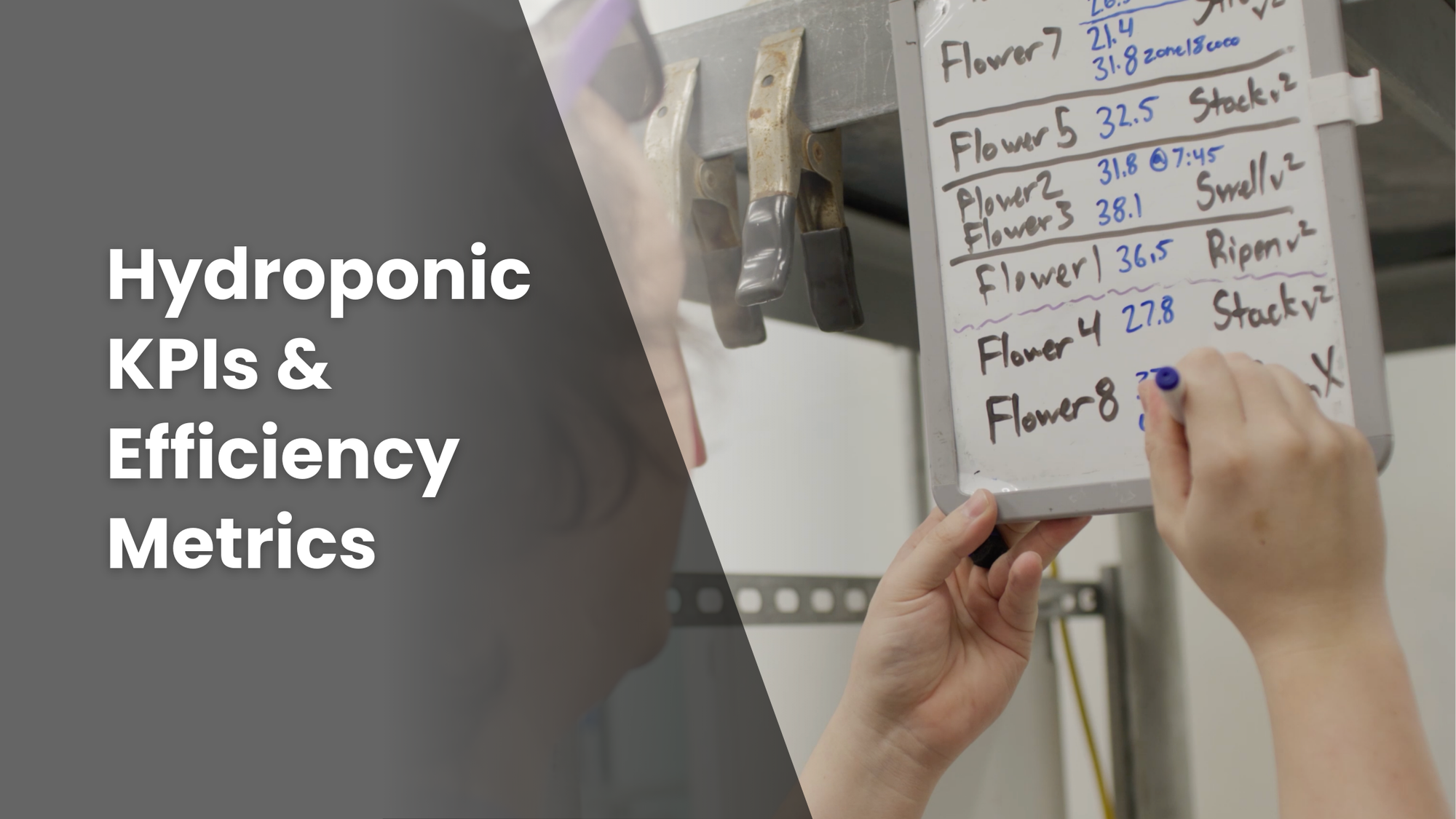
Modern cultivation depends on consistent data collection, yet many facilities still operate reactively rather than analytically. Without runoff logs, PPFD maps, EC trendlines, substrate moisture data, or fertigation alarms, small issues compound into significant crop-wide problems. Plants thrive when decisions are based on measured patterns instead of visual cues alone. Facilities that integrate sensors, track weekly trends, and compare results to established feed charts, such as the Front Row Ag charts, achieve far more consistent yield and quality across multiple harvest cycles.
FAQs
What is the most common cultivation mistake?
Improper irrigation scheduling, either too wet or too dry, is the most frequent cause of yield loss.
How do I fix hydroponic grow errors fast?
Start by checking EC, pH, water temperature, runoff, and VPD. Correct those before adjusting nutrients.
Why is my flower yield low even with high PPFD?
If VPD, nutrition, root health, and CO₂ aren’t aligned with light intensity, plants cannot use the extra photons.
Can nutrients cause quality loss?
Yes. Incorrect EC or poor mixing practices reduce terpene expression and cause tip burn or fade.
Conclusion
Most cultivation mistakes come from small, compounding drifts in environment, irrigation, nutrition, and sanitation rather than a single catastrophic failure. When VPD stays stable, irrigation follows predictable dry-back patterns, EC and pH remain within tight ranges, and airflow and lighting are evenly distributed, plants respond with consistent growth and higher-quality flowers. Strong IPM habits and clean fertigation systems further reduce stress events that limit production. By pairing disciplined cultural practices with reliable nutrient programs such as the Front Row Ag feed chart, growers can minimize variability, prevent hidden yield loss, and maintain a predictable, repeatable cultivation process cycle after cycle.